The One-Hour Perfect Tahoe Plan
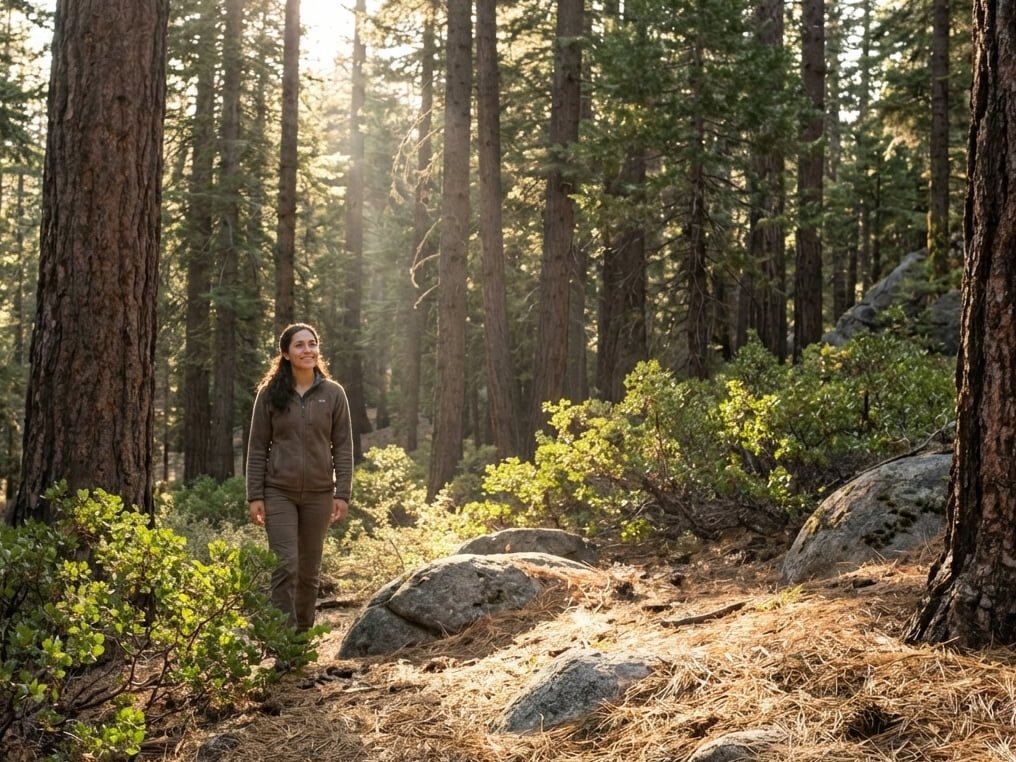
The mindset: before you do anything else
If you truly have one hour, discard the fantasy of “seeing Tahoe” by cramming in multiple stops. You’ll spend the whole hour in transit, parking, and mild frustration.
Also—don’t make this a selfie mission. Nobody cares about your selfies. Tahoe isn’t here to be your backdrop. If you want the highest-return hour, you need one thing that delivers fast: quiet, trees, and space. The forest will speak to you if you give it a minute.
The punch line
Your best one-hour Tahoe experience is a short walk into the forest from the nearest trailhead, then sitting still long enough to actually feel it.
Beaches are SECONDARY because traffic, parking delays, crowds, and entrance fees can burn the entire hour and stress you out.
The simple one-hour plan
This isn’t a hike. It’s a reset.
1) Find a trailhead fast (don’t overthink it)
Go to AllTrails.com and filter for something nearby, or
Open your maps app and search: “trailheads near me”.
Choose the closest option that looks like you can step into trees quickly.
2) Walk in 5–10 minutes max
From the parking area, walk just far enough that:
the road noise fades, and
you’re not surrounded by people.
10 minutes is plenty. If you rush 30 minutes out, you spend your hour moving fast and noticing nothing.
3) Stop moving and let Tahoe happen
Stand or sit. No agenda.
Breathe deep.
Listen (wind in needles, birds, distance).
Watch the light and movement.
Let your brain stop scanning for “next.”
Enjoy that shit.
4) “Call time”: leave yourself 10 minutes to get back
When there are 10 minutes left, head back to the car.
Your goal is to finish calm—not sprinting, not checking your watch every 30 seconds.
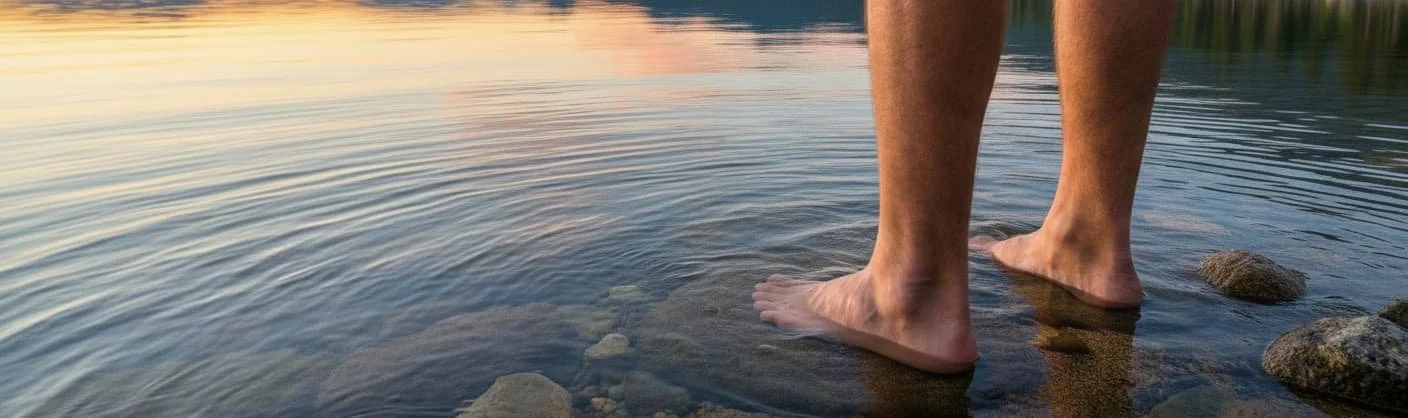
If you insist on water: 2nd option
If the forest truly isn’t happening for you today, do a feet-in-the-water stop.
But here’s the honest caveat: beaches can be time traps. If you can’t park easily and walk to water immediately, you’re about to spend your whole hour in a slow-motion parking quest.
Rule: If it’s not effortless, skip it and go to the forest.
A few practical truths
Timing: early morning or late afternoon usually feels better (less chaotic, better light, fewer people).
Exit strategy: don’t chase the “perfect spot.” You’re not filming a commercial. Walk in a bit, stop, soak it in, leave clean.
Leave no trace: pack out your trash. Tahoe doesn’t need souvenirs.
Want more Tahoe plans like this—simple, high-return, and built for real conditions?
Get low-volume updates when I publish new guides and maps, HERE
